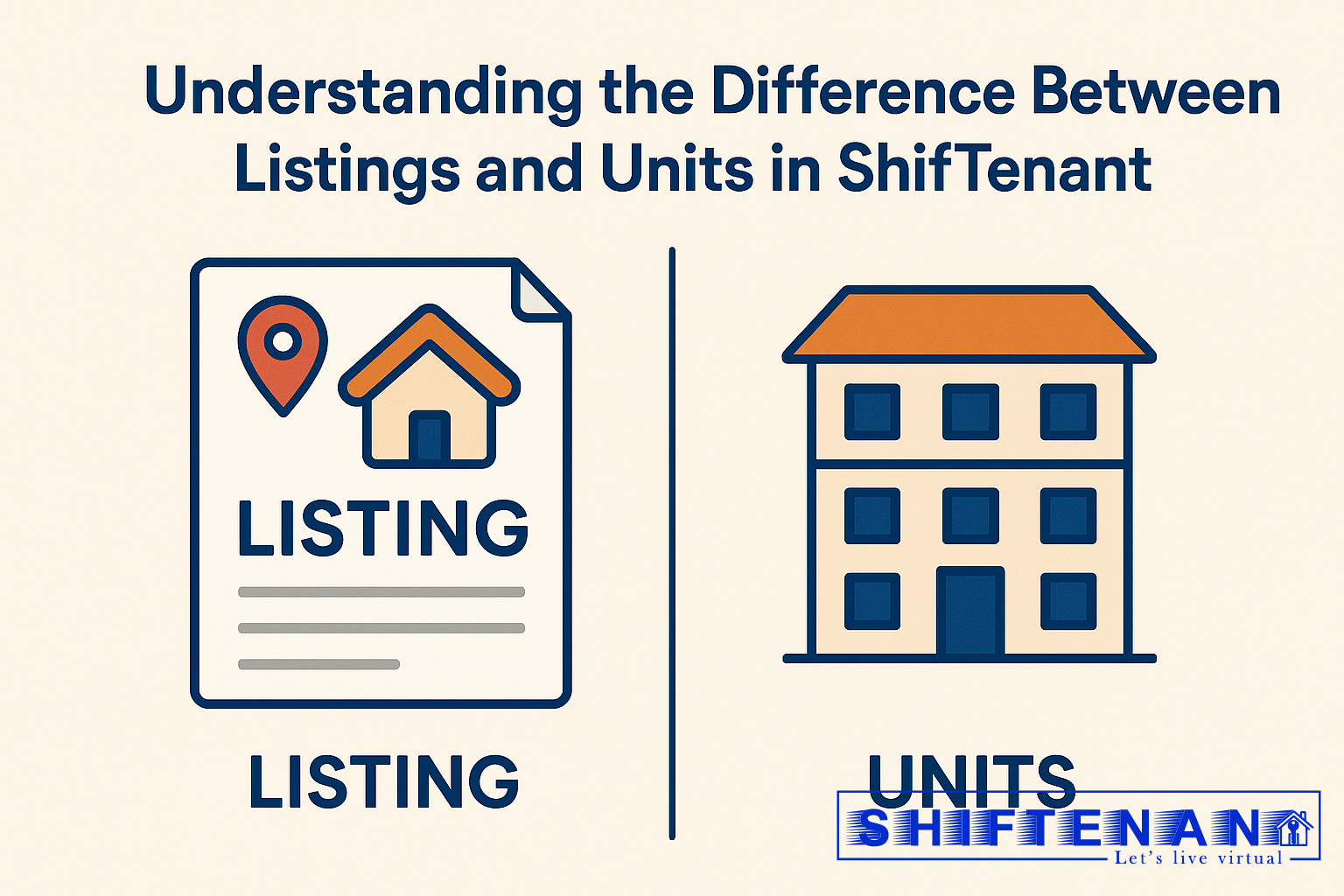
One of the most common questions we receive from new customers is:
"What is the difference between a Listing and a Unit?"
While the two terms are related, they represent different aspects of your property portfolio. Understanding this distinction helps you choose the right ShifTenant subscription and manage your properties more effectively.
What is a Listing?
A Listing is the property you advertise or manage as a whole.
Think of it as the building, house, apartment complex, office block, or commercial property that appears in your portfolio or on your website.
A listing contains general information such as:
Property name
Location
Description
Images
Amenities
Property owner
Property type
A listing can contain one or many units.
Examples of Listings
Green Gardens Apartments
Sunrise Villas
Westlands Office Plaza
Riverside Shopping Mall
Palm Court Airbnb
Each of these is considered one listing in ShifTenant.
What is a Unit?
A Unit is an individual rentable space within a listing.
Units are what generate income and are rented to tenants or guests.
Examples include:
Apartment A101
Apartment A102
Office Suite 12
Shop No. 7
Room 4
Bedsitter 16
Every unit has its own information, including:
Tenant
Monthly rent
Lease agreement
Payment history
Utility bills
Maintenance requests
Occupancy status
Since each unit requires invoices, payment tracking, SMS reminders, emails, digital agreements, backups, and reporting, units are the primary resource that ShifTenant manages.
Real-World Example
Imagine you own Sunrise Apartments.
This property has:
1 apartment building
40 apartments
In ShifTenant, this becomes:
Listings: 1
Units: 40
Although there is only one property being advertised, there are 40 separate units being managed.
Another Example
Suppose you manage the following properties:
PropertyUnitsGreen Apartments30Palm Villas15City Offices25Westlands Mall20
Your account would contain:
4 Listings
90 Units
This is why listings and units are counted separately.
Why Does ShifTenant Limit Units More Than Listings?
Many customers notice that ShifTenant plans include fewer units than the number of listings might suggest. This is intentional.
A listing is mostly descriptive information that requires minimal system resources.
A unit, however, is an active entity that can generate:
Rent invoices
Payment reminders
SMS notifications
Email notifications
Digital lease agreements
M-Pesa payment records
Tenant records
Maintenance requests
Financial reports
Accounting transactions
File storage
Database backups
As the number of units grows, so do the computing resources, storage, database capacity, backup requirements, and communication costs.
For this reason, units are the primary factor used when determining ShifTenant subscription plans, ensuring that every customer enjoys fast performance and reliable service while only paying for the resources they actually use.
Which Limit Should You Pay Attention To?
If you are selecting a ShifTenant plan, the Unit limit is usually the most important number.
For example:
A landlord with 3 apartment buildings containing 150 units needs a plan that supports 150 units, even though they only have 3 listings.
Likewise:
A real estate agency may advertise 30 different properties, but if those properties contain 800 rentable units, they need a plan capable of managing 800 units.
Quick ComparisonListingsUnitsRepresents a property or buildingRepresents an individual rentable spaceUsually fewer in numberUsually much higher in numberUsed for marketing and property organizationUsed for tenant and lease managementStores property informationStores tenant, rent, invoices, payments, and maintenance recordsLow resource usageHigher resource usage due to transactions, communications, and storageThe ShifTenant Approach
ShifTenant is designed to scale with your business, whether you manage a single rental house or thousands of apartments across multiple locations.
By separating Listings from Units, the platform provides a fair and transparent pricing model:
Listings help you organize and showcase your properties.
Units reflect the actual scale of your property management operations and the system resources required to support them.
This approach ensures that small landlords don't overpay, while larger property managers have the capacity they need to manage growing portfolios efficiently.
Whether you manage one house with five rooms or one hundred apartment complexes with thousands of units, ShifTenant provides the tools to streamline operations, automate rent collection, improve tenant communication, and grow your real estate business with confidence.